Hong Kong External Commentary

The assassination of Khamenei triggered a regime change in Iran: After the collapse of theocracy, where will the Revolutionary Guard lead the country?

The US-Israeli coalition's "decapitation" operation not only eliminated Iran's Supreme Leader but also completely ended the country's 37-year-long theocratic political era. In the vacuum created by the paralyzed constitutional process due to the war, the Islamic Revolutionary Guard Corps took full control of the country. However, the militarized authoritarian regime, lacking religious legitimacy and facing economic collapse, is pushing Iran into an even more dangerous abyss of governance.

The assassination of Khamenei triggered a regime change in Iran: After the collapse of theocracy, where will the Revolutionary Guard lead the country? Read More »

Weaponization of Winter: The Strategy of Attrition and the Air Defense Crisis on the Fourth Anniversary of the Russo-Ukrainian War

As the Russo-Ukrainian war enters its fifth year on February 24, 2026, the conflict has transcended a simple territorial dispute, evolving into a war of attrition testing industrial capacity and social resilience. On the eve of its fourth anniversary, Russia's massive airstrikes were not merely a military operation, but also a meticulously planned "anniversary politics" maneuver. Faced with Moscow's systematic attacks on infrastructure and saturation strikes, Ukraine is grappling with a dual crisis: depletion of air defense interception ammunition and the near collapse of its energy network.

Weaponization of Winter: The Strategy of Attrition and the Air Defense Crisis on the Fourth Anniversary of the Russo-Ukrainian War Read More »

The Geneva Paradox: Diplomatic maneuvering amid a strategic deadlock and divergence between Western and European approaches

On February 18, 2026, peace talks between the US, Russia, and Ukraine in Geneva, Switzerland, broke down after only two hours. This diplomatic maneuvering revealed a profound "strategic schizophrenia" in the current international situation: the coexistence of minor technological progress and absolute political deadlock, forming the insurmountable "Geneva Paradox." Behind the negotiating table, Washington's pressure for a deadline, Kyiv's constitutional defense, and Europe's institutional restructuring in pursuit of strategic autonomy are reshaping the power landscape of this fifth-anniversary war.

The Geneva Paradox: Diplomatic maneuvering amid a strategic deadlock and divergence between Western and European approaches Read More »

Strategic Vulnerability Under the Tearing Apart of the Social Contract: Iran's Regime Crisis from Both Inside and Outside

Iran is facing its most severe regime survival crisis since the 1979 revolution. Hyperinflation reaching 601 TP3T and widespread bloodshed have utterly ruptured the social contract between the government and the people. When this "legitimacy vacuum" meets the "maximum pressure 2.0" from the US and Israel, Tehran's external bargaining chips are being offset by its internal economic collapse and social fragmentation. How to address this geopolitical vulnerability stemming from deep-seated social contradictions is a question that global leaders should seriously consider.

Strategic Vulnerability Under the Tearing Apart of the Social Contract: Iran's Regime Crisis from Both Inside and Outside Read More »

Saying Goodbye to the "Ice Age": A Pragmatic Shift and Geopolitical Balancing in Britain's China Strategy

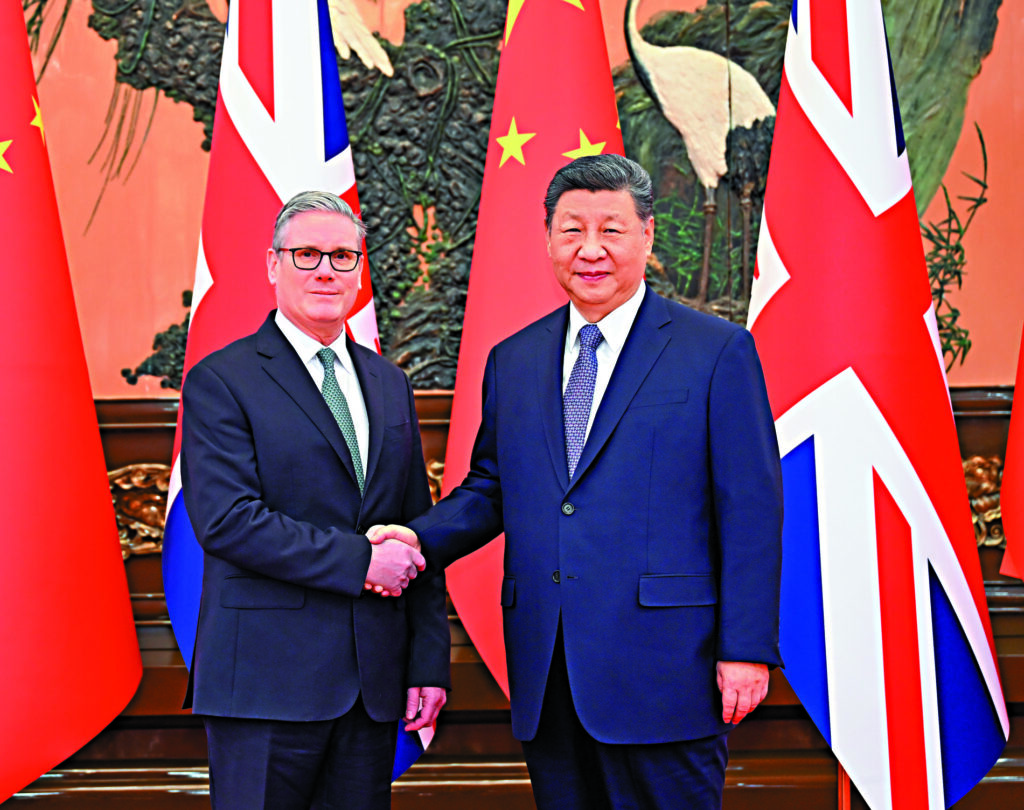
In January 2026, the British Prime Minister will pay an official visit to Beijing and Shanghai, China. This marks the first visit to China by a British head of government in nearly eight years, bringing an end to the fluctuating UK-China diplomatic relations of the past decade. Faced with a profound restructuring of the global order, 10 Downing Street is abandoning its past policy of fluctuating between the "Golden Age" and the "Ice Age," and instead adopting a highly consistent pragmatic realism.

Saying Goodbye to the "Ice Age": A Pragmatic Shift and Geopolitical Balancing in Britain's China Strategy Read More »

A "Combination Punch" Under Supply Chain Restructuring: The Industrial Logic and Risk Hedging of the British Business Community's Visit to China

In early 2026, accompanying the British Prime Minister, a high-level delegation of approximately 60 business leaders and institutional representatives will arrive in China. This is not merely a diplomatic public relations effort, but also signifies a structural restructuring of the UK's foreign economic strategy at the industrial level. Against the backdrop of escalating US-China trade frictions and rising protectionism in the EU, bilateral trade in goods and services between China and the UK is still projected to reach $103.7 billion in 2025, demonstrating the deep resilience of the two countries' interdependent economies. The industrial layout, institutional alignment, and risk hedging strategies of this business delegation provide an excellent micro-perspective for observing how the UK seeks growth amidst challenges.

A "Combination Punch" Under Supply Chain Restructuring: The Industrial Logic and Risk Hedging of the British Business Community's Visit to China Read More »

The resurgence of hegemony and the collapse of international law: The global geopolitical upheaval caused by the Trump administration's "hijacking" of Maduro.

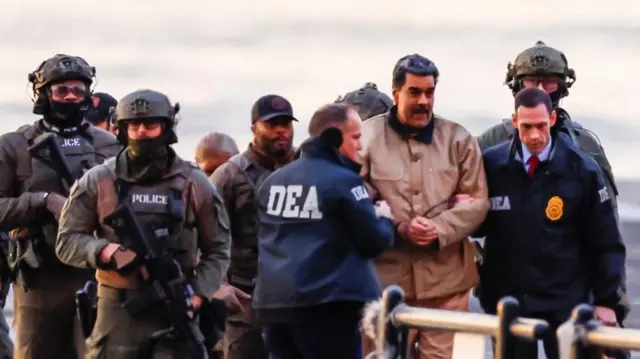
In January 2026, the international political system experienced its most structurally destructive upheaval since the end of the Cold War. The Trump administration launched Operation Absolute Resolve, a special military operation that raided Caracas, the capital of Venezuela, forcibly capturing President Nicolás Maduro and extraditing him to the United States for trial on charges of "drug terrorism." This series of "law enforcement" actions disguised as "decapitation strikes" not only showcased the extreme power of the United States but also signaled a crisis of complete collapse for the post-World War II international legal system.

The resurgence of hegemony and the collapse of international law: The global geopolitical upheaval caused by the Trump administration's "hijacking" of Maduro. Read More »

The New Jungle Law of Great Power Competition: Strategic Warnings and Reflections for China Amid the Venezuelan Crisis

In early 2026, the Trump administration's "Operation Absolute Resolve" in Venezuela, a show of force that effectively captured Venezuelan President Maduro, shocked the world. This decapitation strike, though taking place on the distant South American continent, served as a stark warning to China on both strategic and military levels. It was not merely a purge of America's backyard, but also revealed that great power competition had entered a "jungle era" devoid of rules, forcing China to deeply rethink its existing global strategy and defense red lines.

The New Jungle Law of Great Power Competition: Strategic Warnings and Reflections for China Amid the Venezuelan Crisis Read More »

A New Blueprint for Japan? The Cost of Sanae Takaichi's Cabinet Formation and a High-Stakes Economic Gamble

Sanae Takaichi officially became Japan's first female prime minister, a significant breakthrough not only in gender equality but also a major turning point in Japanese politics and policy direction. Her appointment marks the beginning of a political restructuring and policy reshaping, from rebuilding internal alliances and shifting diplomatic stances to a comprehensive economic policy offensive. The Takaichi government is facing a multi-dimensional test.

A New Blueprint for Japan? The Cost of Sanae Takaichi's Cabinet Formation and a High-Stakes Economic Gamble Read More »