
The 22 key indicators set in the Five-Year Plan should be included in the mid-term review.
The Five-Year Plan sets out 22 key indicators, including 5 binding indicators. Some scholars have suggested that a mid-term review should be conducted. John Lee, however, argues that if the binding indicators are not met, accountability should be enforced unless specific reasons can be explained.
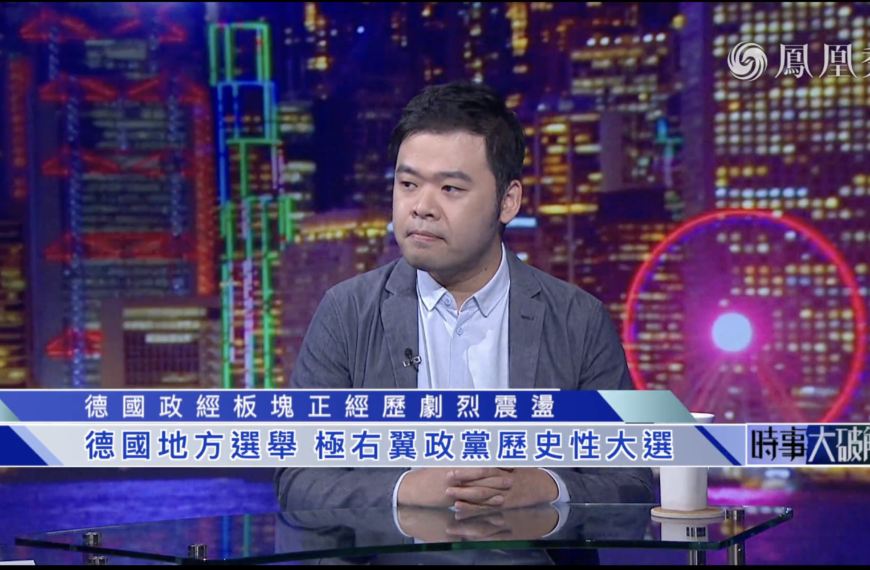
German local elections
The far-right party's historic landslide victory in Germany's local elections has shocked the nation and Europe! How will this election affect Germany itself, and how will it sound alarm bells for neighboring countries?

Rumors of officials and their staff jumping ship are rampant.
How could Trump have imagined facing such a predicament of being abandoned by his inner circle? In the past month, high-ranking officials from the White House core team and the defense system have jumped ship, highlighting the chaos in Trump's governance. Some analysts believe that the Republican Party will lose in the midterm elections, and Trump's confidants are leaving early to avoid the risks of being caught in a sinking ship or even being investigated by Congress.

The United States removes Syria from its list of "state sponsors of terrorism".
A recent news item from the Middle East is that the United States announced it was removing Syria from its list of state sponsors of terrorism; simultaneously, previously opposing democratic forces within Syria have disarmed and are willing to submit. What does this indicate? How should we interpret this situation?

The "jumping into the sea" of aircraft carrier soldiers reveals the waning influence of the US military's hegemony.
The rumors surrounding the suicide of a sailor on the USS Abraham Lincoln are merely the tip of the iceberg, reflecting the waning strength of America's global military hegemony and the underlying, potentially serious crisis. While the US nominally possesses eleven aircraft carriers, only two are actually operational. These carriers are generally facing aging issues, and shrinking shipbuilding and maintenance capacity is becoming increasingly common. Trump's reckless ignition of the Middle East conflict has disrupted America's global strategic layout, creating a predicament of stretched military resources and making America's self-proclaimed "great again" impossible.

The Xinjiang Cotton Mill has been transformed into a red tourism scenic spot, marking a solemn national commitment to ecological environment protection.
After the peaceful liberation of Xinjiang, the central government established the Xinjiang Production and Construction Corps (XPCC) there. Today, the XPCC's unique military reclamation culture has developed into a red tourism route. Our reporter previously followed the "Sun Project" [...]

Cutting military exercises between South Korea and the United States: to ease tensions in Northeast Asia or to weaken U.S. security commitments?
The US midterm elections are becoming a hidden variable in the global security landscape. To alleviate domestic inflation and voter pressure, Washington has shifted to transactional diplomacy: unilaterally reducing US-South Korea military exercises in exchange for diplomatic achievements with North Korea, and showing signs of fatigue in the Middle East and Ukraine. Various parties are seizing the opportunity to adjust their strategies: Iran is using the Strait of Hormuz to pressure energy prices; China, Russia, and North Korea are deepening cooperation; Gulf states are signing the Mecca Agreement to promote defense autonomy; and Ukrainian technocrats are using the opportunity to challenge the current regime. The global order is rapidly fragmenting, with allies seeking multilateral hedging to mitigate the uncertainty of US commitments.
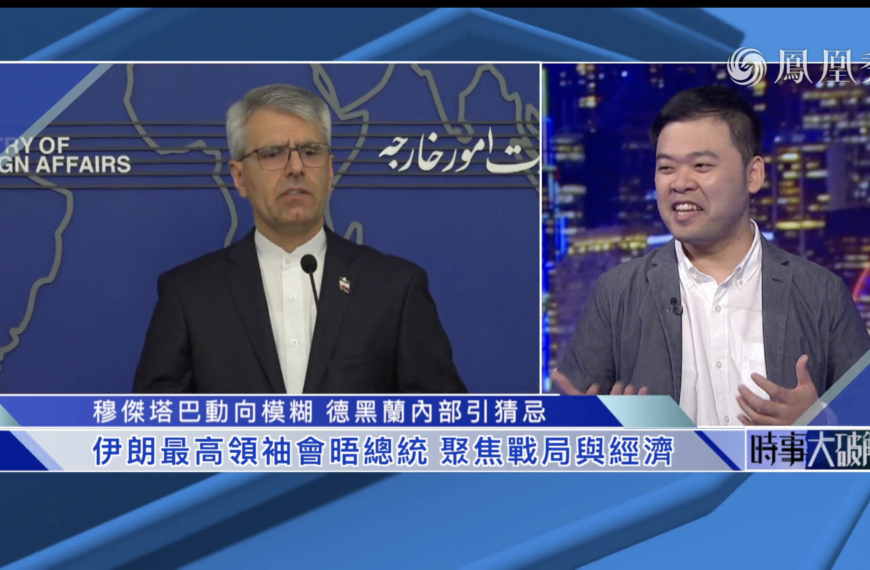
Iran's Supreme Leader meets with President to focus on war and economy
Iran's Supreme Leader and President met to focus on the war and the economy. Furthermore, with a reshuffle at the top in Iran and the US shifting its focus to economic issues, will this bring a turning point to the Middle East situation?

With heat waves and drought looming, is Europe's decline inevitable?
The heatwave in Europe has led to drought, causing the Danube and Rhine rivers to drop in water levels, affecting inland waterway shipping and nuclear power plant generation. Coupled with the continuous wildfires that have spiraled out of control, the direct economic losses are estimated at around 3.1 billion euros. Could this disaster be the last straw that breaks the back of Europe's recovery?

Calls for greater push to wean young off social media
A think tank has urged authorities to step up efforts to address addictive social media use among children and adolescents. Ray Poon, research director of PoD Research Institute, said now might be a good time for Hong Kong to consider stronger regulation as more and more places worldwide are restricting or banning social media for children under 16.
More