Media Interviews

A leading scholar advocating for a stronger "Global South" argues that China hopes for North-South dialogue to avoid a bloc confrontation.

China has released a white paper titled "Building a More Just and Reasonable Global Governance System: China's Concepts, Initiatives, and Actions." Wang Yiwei, a professor in the Department of Diplomacy at the School of International Relations, Renmin University of China, stated that global governance initiatives largely aim to reform and improve the post-war international system centered on the United Nations. He said that over 851 million people worldwide reside in countries in the "Global South," and should rightfully have 851 million voices in the global governance system, but in reality, they may have less than 151 million. He believes this situation is inconsistent with the principle of "people-centeredness" and the original intentions of the founding of the United Nations.

A leading scholar advocating for a stronger "Global South" argues that China hopes for North-South dialogue to avoid a bloc confrontation. Read More »

US military airstrikes on southern Iran during ceasefire period emphasize self-defense without breaking the agreement.

Just as US President Trump said that the US-Iran ceasefire negotiations were progressing well, the US military launched a self-defense strike against Iranian missile facilities in southern Iran. What impact will this attack have on the US-Iran ceasefire negotiations?

US military airstrikes on southern Iran during ceasefire period emphasize self-defense without breaking the agreement. Read More »

Putin's visit to China

Following Russian President Vladimir Putin's visit to China, which came shortly after Trump's, what is the strategic significance of these interactions among China, Russia, and the United States? How will Sino-Russian relations be defined? What are the issues of greatest concern to both sides?

Guests:

Chen Weixin, co-founder and policy research director of the think tank Baijiata

Pan Xuezhi, Advisor to the Joint University Institute of International Relations and Diplomacy

Putin's visit to China Read More »

The meeting between the Chinese and US leaders has attracted worldwide attention.

Chinese President Xi Jinping held talks with US President Donald Trump at the Great Hall of the People in Beijing on the morning of March 14. During the talks, more than ten US business representatives, including Tesla CEO Elon Musk, Apple CEO Tim Cook, and Nvidia CEO Jensen Huang, entered the meeting room under the guidance of staff. Does Trump's large delegation signify that the trade war is nearing its end?

The meeting between the Chinese and US leaders has attracted worldwide attention. Read More »

New regulations to control the sale and use of drones are believed to ensure airspace security

The Civil Aviation Administration of China previously announced that starting this month, all drones sold and used in mainland China must be registered under real names and activated in the system before they can fly, with Beijing implementing a strict no-fly zone.

New regulations to control the sale and use of drones are believed to ensure airspace security Read More »

The 15th Five-Year Plan provides opportunities for both sides of the Taiwan Strait to work together to restructure the value chain.

Beijing, April 18 (China Review News Agency reporter Chen Siyuan) – The 7th Taiwan Compatriots Association Forum's Economic Sub-Forum was held in Beijing on the afternoon of April 17. Participants shared their views on the 15th Five-Year Plan and cross-strait economic integration, believing that the plan provides new opportunities for cross-strait economic integration and that both sides should work together to restructure the global value chain.

The 15th Five-Year Plan provides opportunities for both sides of the Taiwan Strait to work together to restructure the value chain. Read More »

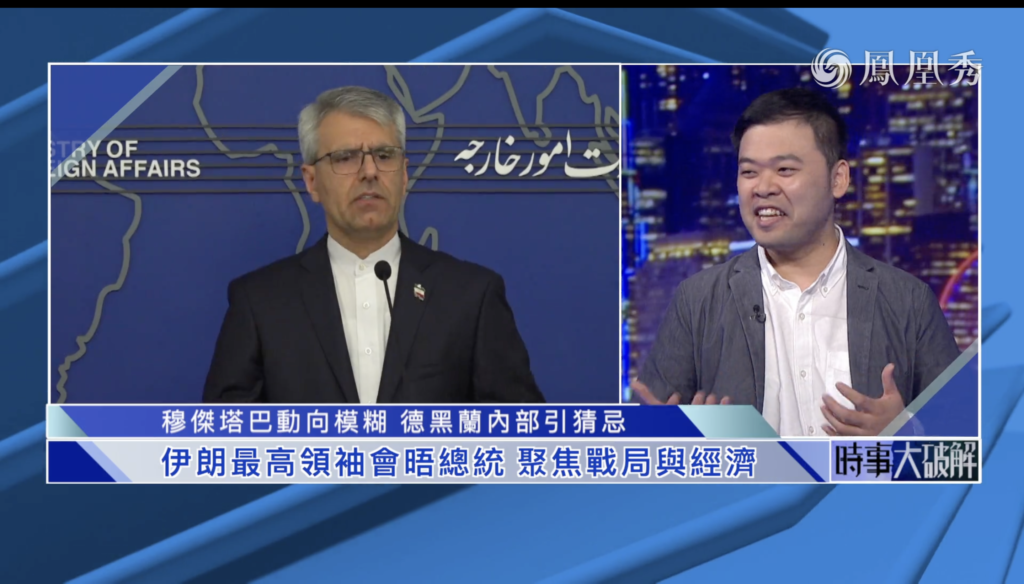
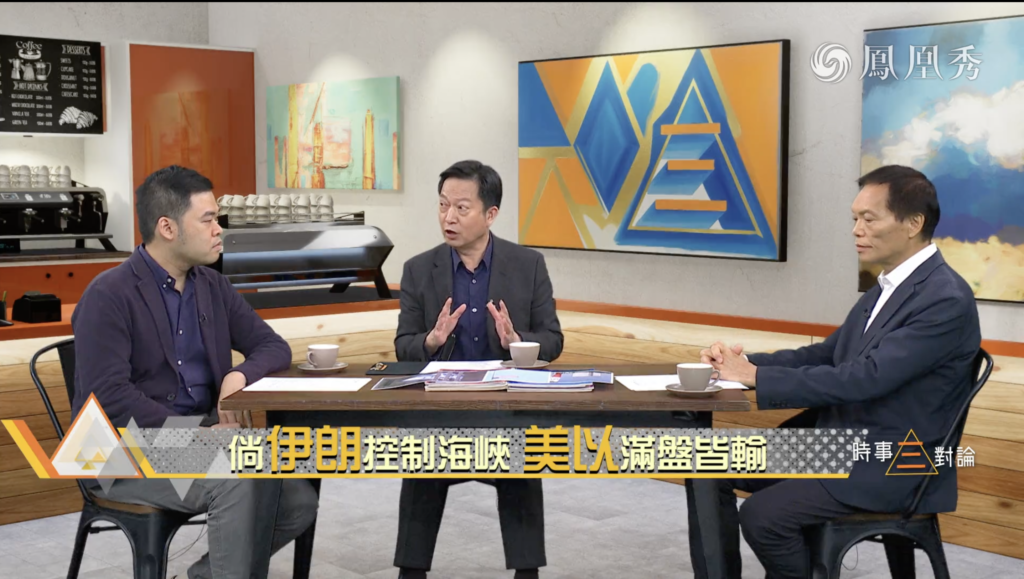
Why hasn't Iran collapsed despite the combined pressure from the US and Israel?

Iran is isolated in the Middle East, fighting a six-week war against the US and Israel alone, ultimately forcing the US to agree to a ceasefire and peace talks. The source of their confidence in this protracted power struggle deserves further investigation. Iran's retaliatory measure of blocking the Strait of Hormuz has prevented the Trump administration from achieving a swift victory, becoming a strategic weakness that the US has struggled to overcome. The superficial cooperation between the US and Israel has led to a protracted stalemate, directly impacting the success of ceasefire negotiations and raising widespread concerns about the potential for war to escalate into a world war.

Why hasn't Iran collapsed despite the combined pressure from the US and Israel? Read More »

Iranian situation

Iran appears isolated in the Middle East, single-handedly confronting the United States and Israel in a six-week-long fierce battle, ultimately forcing the US to agree to a ceasefire and begin negotiations. The source of Iran's confidence behind this protracted struggle warrants careful consideration. Iran's use of the Strait of Hormuz as a key countermeasure prevented the Trump administration from achieving a swift victory, becoming a strategic weakness that the US struggles to overcome. Meanwhile, the apparent cooperation but deep-seated differences between the US and Israel have led to a prolonged stalemate, directly impacting the ceasefire and peace talks process and raising widespread concerns about whether the conflict could escalate further, even into a world war.

Iranian situation Read More »