Media Interviews

[News Decoder] Iran is in crisis

Iran is entering its most severe systemic crisis since its founding: the EU’s reinstated sanctions have removed Tehran’s diplomatic buffer, while the United States has reactivated and intensified maximum pressure across energy, finance, and trade—triggering a collapse in the rial, surging inflation, and widespread supply‑chain disruption. Nationwide protests met with network shutdowns and coercive force have further entrenched generational divides and accelerated the regime–society confrontation, exposing a widening governance vacuum as the international order moves toward re‑alignment. With Iran’s turmoil now extending well beyond nuclear and sanctions technicalities, it has become a critical indicator of the global rules–power rebalance, with spillover effects poised to shape energy markets, sea‑lane security, and supply‑chain resilience.

[News Decoder] Iran is in crisis Read More »

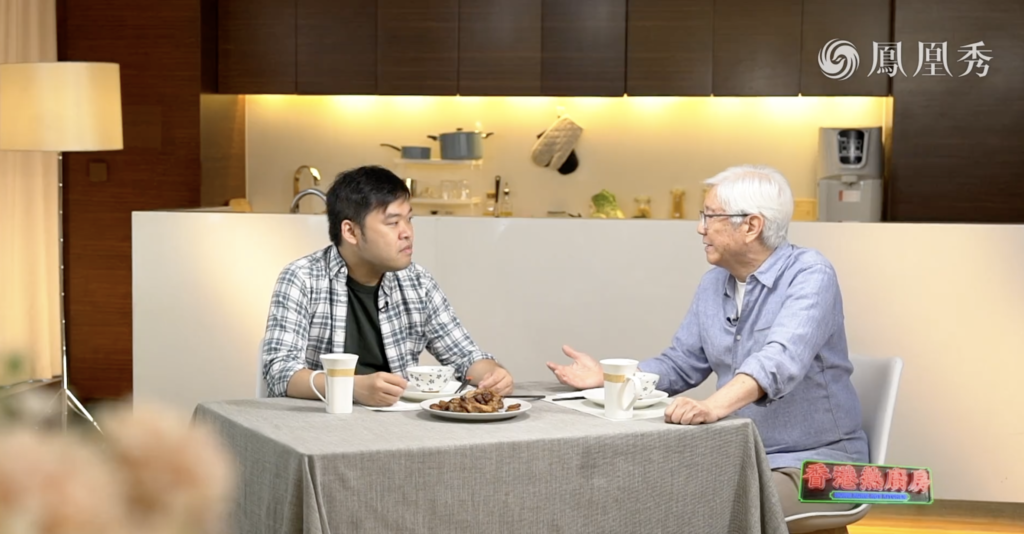
[Hong Kong Hot Kitchen] The US forcibly seizes Venezuela

The US kidnapped the Venezuelan president to New York for trial, disregarding international order. The international community upholds sovereignty and justice, condemning this hegemonic act. However, some argue that using the guise of "justice" justifies rampant robbery. With the US midterm elections approaching, how will public opinion reflect this? Trump's bluff and plans to withdraw from multiple international organizations raise the question: is he withdrawing from the world stage or becoming even more reckless?

[Hong Kong Hot Kitchen] The US forcibly seizes Venezuela Read More »

Following the United Nations International Day of Migrants

Today is International Day of Migrants. In my talk show, "# People's Avenue Central," I discussed how immigration impacts culture and development, sharing two key themes: the challenges of Nordic welfare states and the real stories of Hong Kong people living overseas. Sweden, which has a relatively lenient approach to immigration, is now facing social pressures that have led the government to examine its capacity to accommodate immigrants. Denmark, on the other hand, is strictly controlling immigration and promoting overseas refugee processing centers, sparking integration and human rights controversies, reflecting the complex choices Europe faces in the face of the influx of immigrants. Meanwhile, in recent years, a large number of Hong Kong people have emigrated to the UK and Canada, facing challenges such as job demotion, declining income, and cultural adaptation, while also seeking educational and employment opportunities to start new chapters in their lives. The United Nations has chosen "My Story: Culture and Development" as this year's theme, reminding us that immigration is not only a national issue, but also, for individuals, a journey full of resilience and hope.

Following the United Nations International Day of Migrants Read More »

[News Decoder] The US and Ukraine reached a consensus in Berlin regarding the "90%" proposal.

The US and Ukraine reached a consensus on "90%" in Berlin, but this mainly involves institutional arrangements such as security guarantees, military aid coordination, and reconstruction. The real obstacle is the territorial status, which cannot be technically addressed. The West attempted to stabilize the controllable 80% in Ukraine with a "like Article 5" agreement, but Kyiv insisted on not ceding territory or recognizing the aggression, while Moscow insisted on legal recognition as a prerequisite for peace, leading to a structural confrontation between the two sides.
Therefore, "90%" signifies the initial formation of a framework for the system, but does not represent a peaceful approach; the remaining 10% sovereignty issue is the core factor determining whether the agreement can be implemented. The next step will test whether the international community can build sustainable security and economic support for Ukraine without recognizing the use of force to change the borders, and will also be a stress test for the European security order.

[News Decoder] The US and Ukraine reached a consensus in Berlin regarding the "90%" proposal. Read More »

[News Decoder] Japan's Security Stance and Escalating Tensions in Sino-Japanese Relations

Kaohsiung City's statement that "a contingency in Taiwan" should be included in the National Security Law's provisions for crisis situations implies that Japan can invoke its collective self-defense rights to support US military intervention in the Taiwan Strait, ending strategic ambiguity. Two weeks later, the US finally publicly supported this, placing orders for Japan to export Patriot missiles to replenish US military inventory, validating the integration of the defense industry into the US supply chain. While this increases deterrence, it may also exacerbate coordination between China and Russia, leading to the birth of a new regional "cold peace." Beijing's postponement of the China-Japan-South Korea cultural conference and the imposition of travel warnings and seafood bans demonstrate its strategy of using economic penalties to deter security threats. Northeast Asia is entering a new normal of high risk and low mutual trust; what will be the next sanction? Crisis management may be more urgent than increasing arms purchases.

[News Decoder] Japan's Security Stance and Escalating Tensions in Sino-Japanese Relations Read More »

[News Decoder] Deepening Sino-Russian Strategic Relations and Adjustments to the US-ROK Alliance: Reshaping the Indo-Pacific Security Landscape

Amidst a turbulent international situation, Sino-Russian relations continue to warm. Xi Jinping's meeting with Russian Prime Minister Mishustin demonstrates a comprehensive deepening of bilateral cooperation in high-level interactions, economic and trade cooperation, and institutional alignment. Emerging fields such as artificial intelligence and green development are becoming new engines for bilateral cooperation, promoting the alignment of the 15th Five-Year Plan with Russia's development strategy and strengthening institutionalized cooperation. Meanwhile, US Defense Secretary Hergesse visited South Korea, emphasizing that the core of the US-ROK alliance remains deterring North Korea and promoting "strategic flexibility" for US troops stationed in South Korea to counter the challenge from China. South Korea, however, is responding cautiously, concerned about the impact on its homeland defense capabilities. South Korea has also increased its defense and AI budgets, promoted the construction of nuclear submarines and the transfer of operational control, demonstrating its determination for military self-reliance. The deepening strategic cooperation between China and Russia, and the adjustment of the US-ROK alliance structure, are quietly reshaping the Indo-Pacific region.

[News Decoder] Deepening Sino-Russian Strategic Relations and Adjustments to the US-ROK Alliance: Reshaping the Indo-Pacific Security Landscape Read More »

The seminar advocated that Hong Kong and Macao should leverage their greater advantages to contribute to national development.

The National 15th Five-Year Plan proposes to enhance the effectiveness of governance in Hong Kong and Macao in accordance with the law and promote their economic and social development. The Macao Scholars Alliance held a symposium to discuss how Hong Kong and Macao can contribute to the Greater Bay Area development strategy.

The seminar advocated that Hong Kong and Macao should leverage their greater advantages to contribute to national development. Read More »

[Hong Kong Hot Kitchen] Russia-Ukraine War 

International law explicitly defines Russia as an aggressor, and the United Nations has repeatedly demanded its withdrawal. NATO and the US and Europe are merely supporters, not belligerents. NATO cooperated with Russia after the Cold War, until the Crimean War and the 2022 invasion. After ceasefire negotiations stalled, Trump turned to targeting Russia's energy revenues, demonstrating a "carrot and stick" strategy rather than replacing the arbitrators of the parties involved.

Ukraine has been able to hold out for four years thanks to a long chain of support from the US and Europe: Patriot air defense, HIMARS, ATACMS, and over €300 billion in aid, forming the structural pillars of its resistance against Russian forces. Without this chain, Ukraine would have struggled to withstand multiple waves of airstrikes and ground attacks. The conflict in Eastern Europe remains a stalemate; true peace requires security barriers and multilateral coordination, not a single summit.

[Hong Kong Hot Kitchen] Russia-Ukraine War  Read More »