International situation

A "Combination Punch" Under Supply Chain Restructuring: The Industrial Logic and Risk Hedging of the British Business Community's Visit to China

In early 2026, accompanying the British Prime Minister, a high-level delegation of approximately 60 business leaders and institutional representatives will arrive in China. This is not merely a diplomatic public relations effort, but also signifies a structural restructuring of the UK's foreign economic strategy at the industrial level. Against the backdrop of escalating US-China trade frictions and rising protectionism in the EU, bilateral trade in goods and services between China and the UK is still projected to reach $103.7 billion in 2025, demonstrating the deep resilience of the two countries' interdependent economies. The industrial layout, institutional alignment, and risk hedging strategies of this business delegation provide an excellent micro-perspective for observing how the UK seeks growth amidst challenges.
A "Combination Punch" Under Supply Chain Restructuring: The Industrial Logic and Risk Hedging of the British Business Community's Visit to China Read More »

The resurgence of hegemony and the collapse of international law: The global geopolitical upheaval caused by the Trump administration's "hijacking" of Maduro.

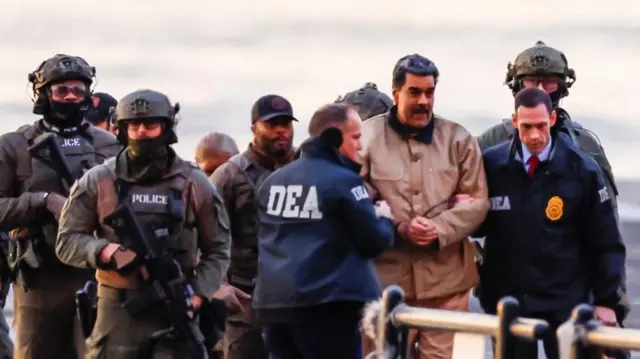
In January 2026, the international political system experienced its most structurally destructive upheaval since the end of the Cold War. The Trump administration launched Operation Absolute Resolve, a special military operation that raided Caracas, the capital of Venezuela, forcibly capturing President Nicolás Maduro and extraditing him to the United States for trial on charges of "drug terrorism." This series of "law enforcement" actions disguised as "decapitation strikes" not only showcased the extreme power of the United States but also signaled a crisis of complete collapse for the post-World War II international legal system.

The resurgence of hegemony and the collapse of international law: The global geopolitical upheaval caused by the Trump administration's "hijacking" of Maduro. Read More »

A New Blueprint for Japan? The Cost of Sanae Takaichi's Cabinet Formation and a High-Stakes Economic Gamble

Sanae Takaichi officially became Japan's first female prime minister, a significant breakthrough not only in gender equality but also a major turning point in Japanese politics and policy direction. Her appointment marks the beginning of a political restructuring and policy reshaping, from rebuilding internal alliances and shifting diplomatic stances to a comprehensive economic policy offensive. The Takaichi government is facing a multi-dimensional test.

A New Blueprint for Japan? The Cost of Sanae Takaichi's Cabinet Formation and a High-Stakes Economic Gamble Read More »

From Unlimited Potential to Shared Adversity: Analyzing the Parallel World of China and Russia Behind Putin's Visit to China

In May 2026, Russian President Vladimir Putin paid a top-level state visit to China just four days after US President Donald Trump left Beijing. Coinciding with the 25th anniversary of the Treaty of Good-Neighborliness and Friendly Cooperation between China and Russia, Beijing defined Sino-Russian relations as "true friends who share weal and woe." This marked a shift from the emotionally charged "unlimited" cooperation of 2022 to a deep strategic partnership based on institutional realism. Amidst great power rivalry and the ongoing conflicts in the Middle East, the back-to-back visits to China by the US and Russian leaders were no coincidence, but rather a calculated power maneuver by Beijing. This escalation of political symbolism reflects the restructuring of the global power structure and the soaring security premium. China is demonstrating its ability to construct a parallel order to the world by recalibrating its strategic foothold with Russia.

From Unlimited Potential to Shared Adversity: Analyzing the Parallel World of China and Russia Behind Putin's Visit to China Read More »

Constructive Strategic Stable Relationship: The Tactical Balance Between China and the US in a Gray State

The May 2026 summit between the Chinese and US leaders in Beijing marks a historic turning point, as the world's two superpowers enter a "gray zone" after eight years of extreme friction. This meeting, driven by a policy of "mutually assured interference," reflects the two countries' attempts to avoid a complete loss of control amidst irreconcilable structural contradictions. Faced with geopolitical turbulence, Washington and Beijing, constrained by institutional limitations, are exploring a new, constructive, and strategically stable relationship.

Constructive Strategic Stable Relationship: The Tactical Balance Between China and the US in a Gray State Read More »

Tehran's "retreat as a strategic advance": Oil storage bottlenecks and the subversion of maritime legal principles

In late April 2026, the strategic stalemate in the Persian Gulf reached a highly deceptive turning point. Iran, through Pakistan, submitted a three-phase negotiation proposal to Washington, prioritizing a ceasefire and the lifting of the maritime blockade, while postponing the review of its nuclear facilities—a matter of utmost concern to the United States—to the last minute. The US president expressed strong dissatisfaction with this roadmap. This seemingly extremely unequal compromise was by no means a strategic capitulation by Tehran under maximum pressure, but rather a "retreat to advance" strategy employed to deflect crisis by reshaping the maritime legal order on the eve of the physical collapse of its domestic infrastructure.

Tehran's "retreat as a strategic advance": Oil storage bottlenecks and the subversion of maritime legal principles Read More »

Russia-Iran dual-track war of attrition: the ultimate calculation of the US defense system

The St. Petersburg Summit at the end of April 2026 formally confirmed the profound reorganization of the Eurasian geopolitical landscape. The meeting between Russian President Vladimir Putin and Iranian Foreign Minister Araqchi marked the formation of a survival alliance aimed at completely bypassing the Western financial and security system. While Washington's strategic attention is firmly pinned to the conflict in the Persian Gulf, Moscow and Tehran are engaged in a precise strategic coordination. This Eurasian strategic symbiosis, coupled with high-intensity military conflicts in the Middle East, is conducting a relentless test of the limits of America's global defense system and strategic resources.

Russia-Iran dual-track war of attrition: the ultimate calculation of the US defense system Read More »

Trump's timeline politics: Overall economic turmoil under the "fight while negotiating" strategy

The military stalemate between the US and Iran in the Persian Gulf has completely evolved into a political spectacle of maximum pressure. US President Trump has repeatedly issued ultimatums filled with profanity through social media, threatening to completely destroy Iran's infrastructure and civilization within hours. This public and emotional approach to national security decision-making has shattered the international community's traditional understanding of crisis management. Within the framework of traditional international political economy, this is not only a strategic loss of control at the geopolitical level, but also a ruthless blow to global macroeconomic stability.

Trump's timeline politics: Overall economic turmoil under the "fight while negotiating" strategy Read More »

Stress Test of Proxy Diplomacy: Great Power Game and Order Restructuring Behind Pakistan's Mediation

Pakistan's mediation efforts reflect the strategic ambitions of middle powers to expand their influence in a multipolar world. However, the limits of this diplomacy lie in Islamabad's inability to bridge the fundamentally divergent strategic red lines of the two sides. Iran presented a tough "ten-point plan," demanding the retention of nuclear enrichment rights, the unfreezing of up to $10 billion in overseas assets, war reparations, and insistence on including a ceasefire in Lebanon in the agreement. In contrast, the United States demanded the unconditional and complete opening of the Strait of Hormuz and a complete abandonment of its nuclear program.

Stress Test of Proxy Diplomacy: Great Power Game and Order Restructuring Behind Pakistan's Mediation Read More »

The Hormuz financial war: How will toll fees shake the "petrodollar"?

In the global political economy landscape, the Strait of Hormuz has always been regarded as the absolute heart of global energy supply. However, the crisis of 2026 revealed a completely new asymmetric game model. The Iranian parliament forcefully pushed through a highly controversial bill authorizing the collection of transit fees from merchant ships passing through the Strait of Hormuz. This system, packaged as a "passage permit," required certain vessels to pay fees of up to $2 million.

The Hormuz financial war: How will toll fees shake the "petrodollar"? Read More »